 how-to
Buying Gifts from Independent Workshops: A Guide
Table of Contents
- Why Buying Gifts from Independent Workshops Matters
- How to Identify Authentic Handmade Gifts
- Finding Independent Makers and Artisan Workshops
- The Benefits of Shopping Small Business
- Sustainable Gift Giving Guide
- Logistics of Workshop Gifting: What to Expect
- Making Your Purchase: A Step-by-Step Process
- Common Mistakes to Avoid When Buying Workshop Gifts
- Frequently Asked Questions
Last Updated: September 3, 2026
Why Buying Gifts from Independent Workshops Matters
Buying gifts from independent workshops means investing directly in someone's skill, vision, and livelihood while bypassing mass production entirely.
A bespoke gift carries intention and authenticity. Hand-thrown ceramics, hand-bound journals, and custom illustrations each reflect the maker's creative fingerprint in ways industrial production cannot replicate.
Your money reaches the creator directly, not a corporate structure. Red Robin Gifts exemplifies this model: each piece features designs by award-winning autistic artist SJH Designs, thoughtfully designed and printed from their Staffordshire workshops.
Independent makers typically use smaller production runs with eco-conscious methods, funding craft rather than throwaway culture (peer-reviewed research).
How to Identify Authentic Handmade Gifts
The market for "artisan" goods has exploded, and not all of it is genuine. Learning to spot authentic handmade work separates thoughtful gifting from marketing theatre.
Authentic makers articulate their process: why they chose materials, how they develop designs, what inspired collections. Vague descriptions like "inspired by nature" are red flags; specificity signals expertise.
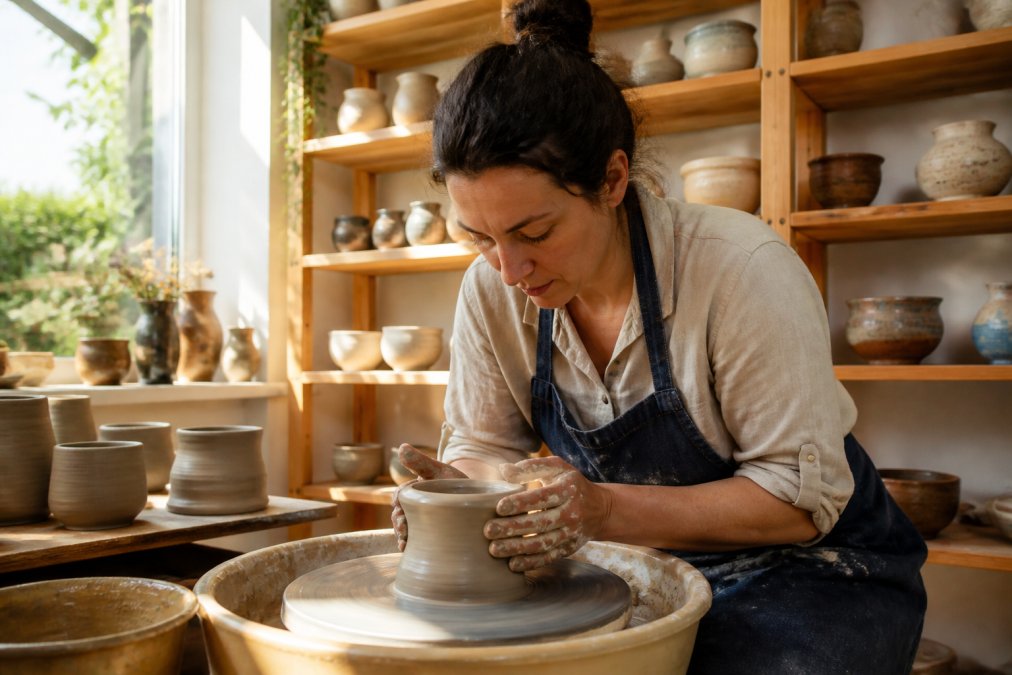
Handmade items carry variations proving human involvement: hand-thrown bowls lack uniform walls, hand-bound journals lack machine-precision edges. Suspiciously perfect items likely came from industrial production.
Independent makers source thoughtfully and can explain material choices. If a maker can't answer material questions, they're likely reselling rather than creating.
Verify credentials through awards, exhibitions, or formal training. Red Robin Gifts works with SJH Designs, an award-winning artist with verifiable credentials.
Ask for process photos or videos. Makers showing their studio, tools, and hands at work demonstrate genuine production.
Finding Independent Makers and Artisan Workshops
Researching Workshop Credentials
Search for makers in your interest area and look for established online presence: websites, consistent social media output, and clear contact information.
Check for professional affiliations with craft associations or maker collectives, which indicate accountability.
Detailed reviews mentioning specific aspects (delivery timeframes, product quality, communication) carry more weight than generic praise.
Independent workshops that hide their operations are often concealing something. Look for makers who explain their process, show their workspace, and discuss material sourcing.
Long-standing accounts with consistent posting and engaged followers suggest legitimacy; new accounts with generic comments from blank profiles are suspicious.
Assessing Quality Before You Buy
Request high-resolution photos from multiple angles; natural light versus studio lighting can dramatically alter appearance.
Ask about durability and care. Confident makers answer thoroughly and often provide care instructions with the item.
Compare pricing against similar work. Significantly lower prices warrant investigation; premium pricing should correlate with demonstrable quality or artist reputation.
For bulk orders, request samples to verify quality before committing.
Check return and refund policies. Legitimate independent makers stand behind their work. They should offer reasonable returns if the item doesn't match its description or arrives damaged.
The Benefits of Shopping Small Business
Your purchase funds someone's creative practice directly. Unlike corporate structures, money spent with independent makers concentrates in the hands of the creator.
Independent makers reinvest profits into their craft: better materials, new tools, skill development, or expanded capacity.
Independent makers often source locally and collaborate with other makers, so your purchase supports the broader creative ecosystem.
Shopping small business means access to customisation: colour variations, size adjustments, personalisation, or bespoke commissions that mass production cannot offer.
Direct communication with independent makers transforms gifting from anonymous consumption into meaningful exchange.
Independent makers produce smaller batches with less packaging, motivated by quality over quantity, which naturally reduces environmental impact.
Sustainable Gift Giving Guide
The most sustainable gift is one used and cherished for years. Independent workshops typically produce durable, timeless pieces rather than trendy disposables.
Sustainable makers use responsibly sourced materials. Ask about material sourcing; transparency indicates genuine commitment to sustainability.
Small-batch production produces less waste than mass manufacturing, with fewer unsold items ending up in landfill (the EPA).
Sustainable makers use minimal, recyclable, or compostable packaging, often creating reusable tins, cloth wrapping, or wooden boxes.
Longevity is the ultimate sustainability metric. Independent makers build for longevity because their reputation depends on quality.
Look for makers explicitly committed to sustainability. Many independent workshops publish sustainability statements, explain their eco-conscious practices, or pursue certifications. Red Robin Gifts, for example, emphasises eco-conscious greeting cards and thoughtful design choices that reflect environmental responsibility.
Logistics of Workshop Gifting: What to Expect
Workshop gifting involves different logistics than high-street shopping. Understanding these differences prevents disappointment and sets realistic expectations.
Many independent makers produce to order, with typical lead times of 3+ weeks (etsy.com). Ask about production timelines before purchasing.
Shipping often takes longer than corporate logistics, but handmade items typically receive protective, thoughtful packaging.
Clarify shipping options and costs before committing; some makers ship only within specific regions or charge premium rates internationally.
Many independent makers provide tracking only after items ship and rely on standard postal services rather than premium couriers.
Document damage with photos and contact the maker promptly; independent makers typically resolve issues cooperatively.
Bespoke or personalised items require additional production time; order well in advance and confirm delivery dates.
Making Your Purchase: A Step-by-Step Process
Placing Your Order
Review product descriptions, photos, and specifications carefully, noting customisation options available.
Check the maker's production timeline; if not displayed, ask directly.
Confirm the estimated delivery date aligns with when you need the gift.
Ensure your preferred payment method is available.
Check return policies, refund conditions, and care instructions.
Provide accurate delivery address, personalisation details, and special instructions. Double-check before confirming.
Request confirmation including order number, expected production date, and estimated shipping date.
Tracking Delivery and Handling Issues
Once your order ships, you'll receive tracking information, though international orders may have limited tracking.
Understand that independent makers often use standard postal services, so delivery may take longer than corporate retailers.
If delivery takes longer than expected, contact the maker; they can often provide information or arrange replacement if items are lost.
If damaged, photograph immediately and contact the maker with photos and description; most will resolve by reshipping or refund.
If the item doesn't match its description, photograph and contact the maker with specific details; most will work toward resolution.
Keep all emails and messages; this protects both you and the maker if disputes arise.
For personalised items, verify accuracy carefully; contact the maker immediately if there's an error.
Common Mistakes to Avoid When Buying Workshop Gifts
Ordering too close to gift-giving dates. Many makers have lead times of 3-4 weeks or longer. Plan ahead and verify production capacity before ordering.
Assuming all "handmade" claims are genuine. Verify through process photos, maker credentials, material transparency, and specific descriptions.
Ignoring customisation costs. Personalisation and bespoke work command premium pricing; factor this into your budget.
Not confirming delivery addresses. Confirm your delivery address matches exactly what you've entered.
Overlooking shipping costs. Factor shipping into your budget from the start.
Purchasing without understanding the product. Read descriptions thoroughly, look at multiple photos, and ask questions if anything is unclear.
Expecting retail-level customer service. Independent makers often operate solo or with small teams, so response times may be slower.
Buying purely on price. Suspiciously low prices warrant investigation; compare pricing against similar work.
Forgetting about seasonal demand. Order earlier than you think necessary during peak gifting seasons.
Not reading reviews carefully. Look for specific feedback about quality, delivery timelines, and maker communication.
Buying gifts from independent workshops requires more intentionality than high-street shopping, but the reward justifies the effort. You're not just purchasing an object, you're supporting a creator, receiving something genuinely unique, and making a choice aligned with ethical consumption. Red Robin Gifts demonstrates this approach perfectly: each piece carries the artistic vision of SJH Designs, created with eco-conscious commitment and genuine care. When you buy from independent makers, you're investing in craft, authenticity, and the people behind the work. That's worth the extra planning.
Frequently Asked Questions
What are the benefits of shopping small business when buying gifts from independent workshops?
Shopping from independent workshops means your money directly supports individual makers and their craft. You get unique, thoughtfully-made items rather than mass-produced alternatives, and you're investing in authentic creativity and skill. Independent makers often prioritise quality over quantity, resulting in gifts that feel personal and special. Supporting small businesses also strengthens local creative communities and helps sustain traditional crafts and innovative design.
How can I verify if a gift is truly handmade by an independent maker?
Look for makers who provide detailed information about their process, materials, and background. Authentic artisans share their story, show behind-the-scenes photos or videos of their work, and are transparent about production methods. Check for artist credentials, awards, or recognition. Ask direct questions about how items are made. Genuine independent makers can explain their techniques and are happy to discuss what makes their work unique. Beware of vague descriptions or stock photos that don't match the product listings.
Are gifts from independent workshops more sustainable?
Many independent workshop makers prioritise sustainability, but not all. Look for specific details: do they use recycled, organic, or responsibly-sourced materials? Is packaging plastic-free or minimal? Are items produced in small batches to reduce waste? Ask makers directly about their environmental practices. Some use eco-friendly printing methods, natural dyes, or reclaimed materials. Verify their claims with evidence rather than marketing language alone. Smaller-scale production inherently generates less waste than mass manufacturing, but confirm the maker's actual sustainability commitments.
What should I expect regarding delivery times when buying from independent workshops?
Independent makers often work to order or in small batches, so delivery timelines vary. Many take 1-4 weeks to create and dispatch items, especially if customisation is involved. Check the maker's website for estimated turnaround times before purchasing. Ask about their typical processing period and whether rush options are available. Reputable makers communicate delays transparently. Allow extra time for shipping within the UK. Always check policies on damaged goods before ordering, and confirm how the maker handles returns or replacements if items arrive in poor condition.
This article was written using GrandRanker
Frequently Asked Questions
What are the benefits of shopping small business when buying gifts from independent workshops?
Shopping from independent workshops means your money directly supports individual makers and their craft. You get unique, thoughtfully-made items rather than mass-produced alternatives, and you're investing in authentic creativity and skill. Independent makers often prioritise quality over quantity, resulting in gifts that feel personal and special. Supporting small businesses also strengthens local creative communities and helps sustain traditional crafts and innovative design.
How can I verify if a gift is truly handmade by an independent maker?
Look for makers who provide detailed information about their process, materials, and background. Authentic artisans share their story, show behind-the-scenes photos or videos of their work, and are transparent about production methods. Check for artist credentials, awards, or recognition. Ask direct questions about how items are made. Genuine independent makers can explain their techniques and are happy to discuss what makes their work unique. Beware of vague descriptions or stock photos that don't match the product listings.
Are gifts from independent workshops more sustainable?
Many independent workshop makers prioritise sustainability, but not all. Look for specific details: do they use recycled, organic, or responsibly-sourced materials? Is packaging plastic-free or minimal? Are items produced in small batches to reduce waste? Ask makers directly about their environmental practices. Some use eco-friendly printing methods, natural dyes, or reclaimed materials. Verify their claims with evidence rather than marketing language alone. Smaller-scale production inherently generates less waste than mass manufacturing, but confirm the maker's actual sustainability commitments.
What should I expect regarding delivery times when buying from independent workshops?
Independent makers often work to order or in small batches, so delivery timelines vary. Many take 1-4 weeks to create and dispatch items, especially if customisation is involved. Check the maker's website for estimated turnaround times before purchasing. Ask about their typical processing period and whether rush options are available. Reputable makers communicate delays transparently. Allow extra time for shipping within the UK. Always check policies on damaged goods before ordering, and confirm how the maker handles returns or replacements if items arrive in poor condition.